University of Massachusetts Lowell
UML Home News Calendar Directory Maps & Directions Libraries Questions
UML Press Room

Hot New Research

UML Home >   Press Room > flame retardants Printer Friendly Printer Friendly

UML - Red Hot Research

Innovative work on flame resistant materials has earned the respect and attention of the U.S. Army-as well as new funding.

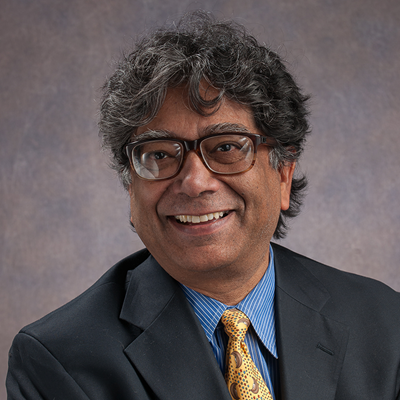
Dr. Arthur Watterson, director of the UMass Lowell Institute for Nano Science and Engineering Technology (INSET) spearheaded the original research in collaboration with Dr. Lynne Samuelson of the Natick Soldier Systems Center. Watterson also credits Prof. Jayant Kumar of the Physics Department and director of the Center for Advanced Materials (CAM), Dr. Rajesh Kumar of INSET and Dr. Virinder S. Parmar, visiting professor in chemistry, for their work and insightful contributions.

The discovery involves the use of certain enzymes as catalysts to synthesize a new class of polysiloxane materials under mild and environmentally friendly reaction conditions. 

Science magazine took notice with a report in the Oct. 15, 2004 issue; a U.S. patent has been issued.

"We knew we had potential with this material-that it's environmentally safe and benign, both to produce and to use-and that it solves many of the problems associated with flame-retardant compounds in wide use," says Watterson. 

Flame Retardent Materials DevelopedThe Army has a significant need for improved, cost effective and environmentally safe flame retardant clothing. Burn injuries are increasing due to urban warfare and from a multitude of flame hazards: incidental exposure, accidents with battlefield combustibles, and enemy attack with thermal or chemical weapons, explosions, or ballistics. The loss of highly trained military personnel in combat from burn injuries is detrimental to operations and expensive; millions of dollars are spent each year on burn injury treatment for the military and costs continue to rise.  

Appropriately designed flame protective clothing can provide critical seconds to escape. Current military clothing made from Nomex and Kevlar provides adequate flame protection but the cost to issue these fabrics to every soldier is prohibitive.    

Lower cost solutions include flame retardant treatments that add 20 percent in weight and use toxic halogenated polymers, many of which are being banned today, worldwide, for environmental and human safety reasons.  Melt drip is another undesirable property of these synthetic fabrics because the melt is known to cause additional serious burns. 

"Our research investigates a new class of low cost materials that are comparable to Nomex and Kevlar in flame retardancy, have virtually no melt drip and are safe for humans and the environment," says Watterson. "The research is based on the high selectivity of nature's catalysts-the enzymes-and could result in a significant breakthrough in fire safe materials." 

The new funding is a three-year grant from the Army's Environmental Quality Program. The grant will fully fund a National Research Council post-doctoral fellow, Dr. Ravi Mosurkal, and bring into the program Dr. Ferdinando Bruno, a visiting scientist from Natick Soldier Center, for his expertise in enzymatic polymerization.

"We are developing the technology and expect to produce fire safe materials-using green chemistry-that eliminate both the generation of toxic materials upon combustion and the leaching of toxic chemicals onto human skin," says Samuelson. "Within three years, we hope to have a material that can be processed as a simple coating or spun into fibers for textile applications that can meet or beat the performance properties we're aiming for."

One University Avenue . Lowell, MA 01854 . 978-934-4000 - Contact Us
UMASS Lowell's Virtual Campus Directory for Mobility Access

UMassOnline | UMass Club | UMass System


This is an Official Page/Publication of the University of Massachusetts Lowell