Peru
UMass Lowell’s Peru Project, Village Empowerment, passed a milestone of sorts, having installed more than 50 renewable energy systems in 16 remote villages in the high Andes mountains.

Using solar or water power to generate electricity in places barely accessible by truck or mule, teams of students and faculty have installed emergency radios and vaccine refrigerators in clinics; placed laptop computers in schools and light fixtures in churches, town halls and village squares; and set up pumps for water distribution systems. Project areas have expanded, with solar water heating, aquaculture projects and a sand filtration system for water purification.

This January will mark the sixteenth time that UMass Lowell teams have traveled to Peru on an international service project and, in the process, have developed their own professional and personal skills. Besides the technically skilled participants, nursing students have also joined the teams.

Mechanical engineering Prof. John Duffy, coordinator of the graduate program in energy engineering, leads two trips each year. He is struck by the commitment that students bring to the task of helping others.

“It’s impressive to see that the students can make such a difference,” he says, “supplying villagers with clean water, helping them survive.”

Providing clean water to the village of Huayash was the project Stacy Bletsis, recent graduate in mechanical engineering, worked on. For her capstone design project, Bletsis, along with partners Lara Thompson and Matt Johnson, designed a solar water pump and distribution system for the village and a sand filtration system to purify the water.

“Before, these people had to get water in buckets from the river,” says Bletsis, who calls the project the best thing she’s ever done, despite the difficult working conditions and high altitude.

Her experience confirms Duffy’s emphasis on the value of service learning, of skills applied to solve real world problems as part of course work.

“Here, if you forget something, you just go to Home Depot and get what you need,” says Bletsis. “There, you have to plan everything out. Either you have it or you don’t. You improvise or you have to leave it for the next trip.”

Two nursing students completed the team—Renee Michaud and Colleen Sousa. They completed nutrition and health surveys in hospitals in the larger towns and clinics in remote villages. To reach Chipre, for example, they had to walk many hours, rising before dawn and climbing several thousand feet in altitude.

Duffy is particularly proud of projects that have involved extensive cooperation with local people, who are resourceful and creative in getting things done. In Quian, for example, townspeople had completed a water purification system and a water supply system from a spring a mile away after the team left. But one of the first UMass Lowell improvements is still one of the most important.

“The feedback from clinics tells as that the radios may be the most useful part of our systems,” says Duffy. “They save many lives.” Using radios, the villagers can communicate with doctors at the hospitals in town.

The newest undertaking is a cooperative venture with local farmers to start aquaculture systems with trout in one village and crayfish in another. This sho

uld be self-sustaining and improve village nutrition. The farmers will give back a percentage of the profits to help pay for equipment and supplies.

While acknowledging the many supporters and in-kind contributions for past trips, Duffy is now actively fund raising to continue the project.

“Rotary Chelmsford and Rotary International gave us $27,000 for the summer trip and that was very significant support,” he says. “Of course, every time we go, we come back with more requests. There’s no end to the need.”

Email from the Andes:

Village Empowerment team members will be checking in from Peru via email. Check back to read about students’ and faculty’s experiences.

top

Clinic radios installed by the Peru Project are credited with saving many lives, as villagers can communicate with hospitals in the larger towns.
 
Stories

Mass High Tech: UML Receives NSF Grant for Service Learning

Lowell Sun: UMass Lowell Engineering Majors Hook Up Peru Village With Clean, Potable Wate

Boston Globe

Solar Today

 
A local man helps install solar photovoltaic cells on a clinic roof. The villagers contribute
many skills as they also learn to install and maintain equipment.
 
A local youngster tries the water with UMass Lowell students Lara Thompson and Stacy Bletsis, who designed the sand filtration and water
A local youngster tries the water with UMass Lowell students Lara Thompson and Stacy Bletsis, who designed the sand filtration and water distribution system.
 
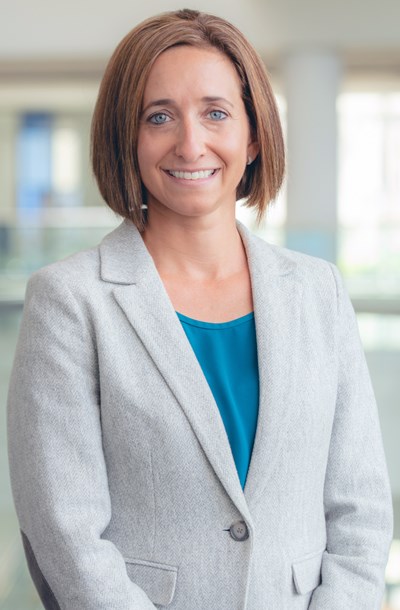
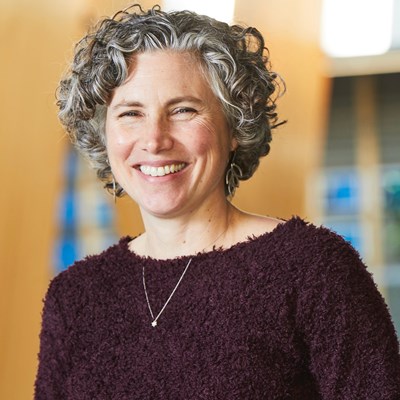
UMass Lowell nursing students Renee Michaud, left, and Colleen Sousa, right, are helped by translator Liz Purchia, a student at Hamilton College, New York.
 

One University Avenue . Lowell, MA 01854 . 978-934-4000 - Contact Us
UMASS Lowell's Virtual Campus Directory for Mobility Access

UMassOnline | UMass Club | UMass System