Provost Outlines Plans to Strengthen Academics

Looks to "Internationalize" the UMass Lowell  Experience

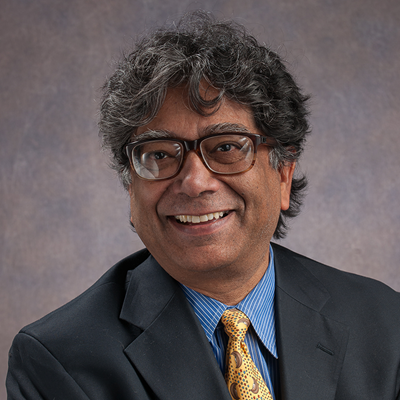
Provost Ahmed Abdelal
Provost Ahmed Abdelel looks forward to ensuring undergraduate success during his tenure.

Ensuring the success of undergraduate students, strengthening graduate programs and research, and “internationalizing” the UMass Lowell experience were among the top priorities articulated by newly appointed Provost Ahmed Abdelal in a recent wide-ranging interview concerning his plans for the University.

Abdelal became provost in mid-May after serving in that same capacity at Northeastern University since 2002. As provost and chief academic officer at UMass Lowell, he will oversee long-term planning, curriculum, instruction, research, outreach and assessment, libraries and academic services.

“There is considerable agreement that there are certain areas we need to concentrate on to further the success of UMass Lowell,” Abdelal said.

As part of the plan to achieve this success, he said his office will be reorganized to include three vice provosts -- one each for undergraduate education, graduate education and research.

Don Pierson, who served as interim provost prior to Abdelal’s appointment, already has been named vice provost for graduate education.

The next step, Abdelal said, will be to conduct an internal search for a vice provost for undergraduate education. Once that is completed, an internal search will be conducted for a vice provost for research. The research position will have increased responsibility for matters such as technology transfer, commercialization and research relations with corporations. For the time being, Partha Chowdry has agreed to continue serving as vice chancellor in an interim capacity.

“These vice provosts will work with the deans, faculty and other administrative units to see what they can do to advance the areas of their prime responsibility,” Abdelal said.

Addressing the welfare of undergraduate students, the provost said, “We want to see that they get the highest caliber of education, and to do this we must identify and eliminate any constraints that might appear to prevent this from happening.”

The best indicator of success, he said, is graduation rate -- the number of students who enroll as freshmen and remain through graduation.

“We have already begun a number of efforts aimed at increasing retention and, if we do this every year, we ultimately will increase the number of students who graduate.”

To this end, he said, he has been working with Tom Taylor, dean of Enrollment and Student Success, and the academic deans to launch this fall what he calls a number of “academic learning communities” for first-year students.

“The basic premise is that you register students based on their major or areas of interest. They will be registered in cohorts to two or three classes together so they can begin to connect with one another, and with a faculty mentor who can describe for them their area of interest and its possibilities. A half or two-thirds of the incoming freshmen in the fall will be in these learning communities.

“In summary, I want us to do everything we can to enhance the graduation rate --  through learning communities, through educational technology and through tutorials. Any time we find a course that has an unacceptable failure rate, we must look to see what kind of support is needed to help the students.”

In order to increase undergraduate enrollment, Abdelal said, deans and department chairs will have to help the admissions office in recruiting students.

“I also want to see us recruit more international students. They will be part of the diversity we want to nurture because of the different cultures they represent. We also want our students to go abroad.

“The chancellor and I and the faculty are interested in doing what we can to further internationalize the campus. The faculty, for example, might consider more ways to further enrich the curriculum so that more courses would be aimed at ensuring our graduates understand more about the global environment.

“We also want to establish vibrant partnerships with other international institutions around the globe. In this regard, we can leverage what the UMass system has already been doing with initiatives like its major agreement with Tsinghua University in Beijing, China. We want to play a significant role in that partnership.”

He said the plan also calls for UMass Lowell to form partnerships in other countries that reflect the heritage of the communities the University serves here in the Merrimack Valley, such as Ireland, Greece, Canada, Latin America and Southeast Asia.

“It also makes sense to consider partnerships in countries that are important now or that will grow in importance in the future. China and India are examples of this.”

Another “major goal,” the provost said, is to strengthen graduate programs. Part of that plan will include being more aggressive in the recruitment of master’s degree students, he said, and placing greater emphasis on a dual bachelor’s-master’s program that would enable students to enter the workforce with a graduate degree after five years of study.

“Many employers prefer that you come with a master’s degree, which in many industries is more desirable these days than a bachelor’s degree,” he said.

Greater emphasis also will be placed on doctoral programs, Abdelal continued, “because they are essential for faculty scholarship and research. When we strengthen our doctoral programs we also enhance the research that our doctoral candidates are conducting with faculty.”

This important research also can be carried out in collaboration with other UMass campuses, such as the medical school in Worcester, and in partnerships with corporations, he said.

Finally, Abdelal said he hopes to see the University bring in more outside funding for research, from sources such as corporations, foundations and the government.


One University Avenue . Lowell, MA 01854 . 978-934-4000 - Contact Us
UMASS Lowell's Virtual Campus Directory for Mobility Access

UMassOnline | UMass Club | UMass System