University of Massachusetts Lowell
UML Home News Calendar Directory Maps & Directions Libraries Questions
UML Search:
eNews

MTTC Grant Awarded to Ryan, Golomb

UML Home >   Press Room > eNews > Ryan Golomb MTTC grant Printer Friendly Printer Friendly

Commercialization Planned for Enhanced Oil Recovery Method

oil samples from lab
New technology extracts 60 percent of crude oil from the sand on left, compared to original on right.

Experienced some sticker shock at the pump, have you? Anxious about the winter ahead and the cost of heat?

Worldwide, the demand for oil continues to rise. At the same time, production is starting to wane and the search is on for new technologies that can retrieve more of the oil from known deposits.

A new UMass Lowell invention for enhanced oil recovery shows promise in meeting this critical need.

The Massachusetts Technology Transfer Center (MTTC) awarded a $25,000 grant to Chemistry Prof. David Ryan and Prof. Emeritus Dan Golomb of the Department of Environmental, Earth and Atmospheric Sciences, to pursue commercialization of their technology. The researchers have also submitted a patent application.

Most people think of oil as sitting in a puddle somewhere underground – “a common misconception,” says Golomb – but usually it’s dispersed in sand, sandstone, or limestone layers because of the way it was formed. Oil starts with the muck found on lake and ocean bottoms; millennia of geologic heat and pressure turn the organic matter to crude oil—itself comprising thousands of organic compounds—that saturates the sand or stone.

Only 20-30 percent of crude oil can be pumped out of the sand through simple drilling, known as primary recovery. Secondary recovery, injecting water under pressure, yields another 10-20 percent. Tertiary recovery involves using liquid carbon dioxide under pressure; this acts as a solvent, reducing the oil’s viscosity and allowing a little more recovery. Nearly 2 percent of U.S. oil production is tertiary, but the liquid CO2 is itself somewhat unstable.

Ryan and Golomb’s innovation is to combine water and carbon dioxide, substances that don’t normally mix, through emulsification. The new emulsion is stable and effective—in lab conditions the method retrieves up to 60 percent of the total oil in a deposit, much better than current methods.

“You can’t ever retrieve 100 percent,” says Golomb. “Some of the compounds are solid.”

Ryan and Golomb developed the new technology while conducting research on the geologic sequestration of carbon dioxide for the U.S. Department of Energy. After being used in enhanced oil recovery, the carbon dioxide could be retrieved, re-used and eventually sequestered.

The MTTC grant will support instrumentation to scale up the process and test it on core samples of sandstone from oil fields. Only five grants were awarded to Massachusetts universities from more than 50 proposals. The MTTC was created in 2004 as part of a state economic stimulus law.

The researchers anticipate the technology could be commercialized within a year and that oil companies will be interested in funding and licensing the process.

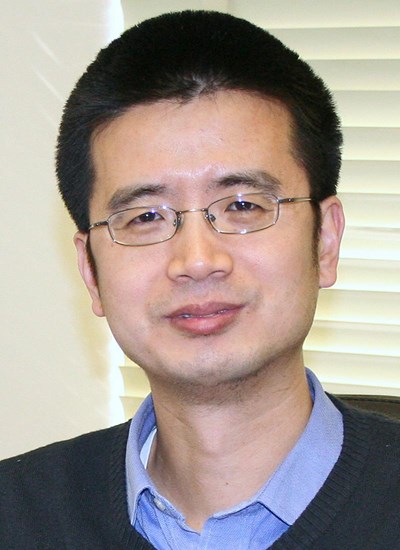
Profs. Ryan and Golomb
Prof. David Ryan and Prof. Emeritus Dan Golomb

One University Avenue . Lowell, MA 01854 . 978-934-4000 - Contact Us
UMASS Lowell's Virtual Campus Directory for Mobility Access

UMass Amherst | UMass Boston | UMass Dartmouth | UMass Worcester | UMassOnline | UMass Club | UMass System


This is an Official Page/Publication of the University of Massachusetts Lowell