University of Massachusetts Lowell
UML Home News Calendar Directory Maps & Directions Libraries Questions
UML Search:
eNews

Researchers Receive $4.8M Grant from Stanford

UML Home >   Press Room > eNews > Reinisch Stanford grant Printer Friendly Printer Friendly

Project Aims to Study Earth’s Radiation Belt

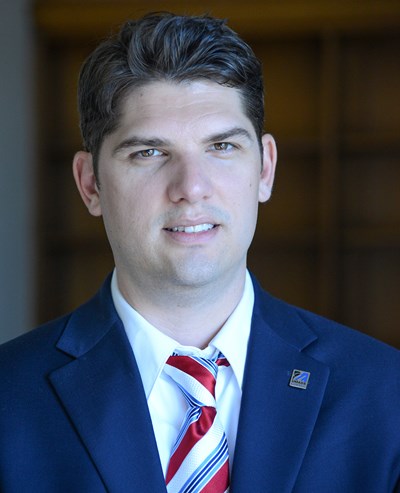
Bodo Reinisch
Bodo Reinisch

Researchers at UMass Lowell’s Center for Atmospheric Research (CAR) have received a $4.8 million grant from Stanford University to study Earth’s radiation belts, those certain regions of the magnetosphere that contain fast-moving electrons with kinetic energies of up to a million electron volts, which pose a serious threat to sensitive electronics onboard a spacecraft. The radiation belts extend from about 2,000 to 30,000 kilometers above the ground, where many communications and remote-sensing satellites are in orbit.

“Because of our earlier success with the Radio Plasma Imager, or RPI, an instrument we built for NASA’s IMAGE mission,” says CAR Director Bodo Reinisch, “we are now considered the expert in the radio sounding of the magnetosphere. As a result, three years ago we teamed up with Stanford University and submitted a joint proposal to the Air Force Research Laboratory to build a ‘wave-particle interaction’ payload for a satellite mission into the radiation belts. The Laboratory accepted the proposal and the project was awarded to Stanford, which issued the subcontract for $4.8 million to UMass Lowell.”

Stanford scientists had long hypothesized that lightning-generated, very-low-frequency (VLF) radio waves – sometimes called “whistlers” – with frequencies of a few kilohertz, could potentially reduce the population of energetic electrons in the radiation belts. This led to the idea of putting a whistler wave transmitter on a spacecraft to study the interaction of VLF waves with the belts’ ambient plasma.

As co-principal investigator for the project, Reinisch is responsible for developing the mission’s VLF transmitter/receiver system. “We have built the engineering design unit, which is currently undergoing final testing,” he says. “The final flight hardware will be fabricated at the Southwest Research Institute in San Antonio, Texas, which also built the RPI flight instrument. This will be the most powerful VLF transmitter ever flown in space. The mission’s launch is scheduled for early 2010.”

Transmitting radio waves from an antenna embedded in space plasma poses special problems since electrons react to the electromagnetic field radiated by the antenna, charging it to high negative voltages.

“For our experiment, we expect our transmitter’s 80-meter-long antenna to be charged to minus 5,000 volts,” says Reinisch. “To study the behavior of such a high-voltage antenna in space plasma, we have received a separate grant from the Air Force Research Laboratory for $1.2 million. This research is being led by CAR co-director Paul Song, and involves many of our scientists in the Center. For more than 40 years scientists have investigated the interaction of an antenna with the ambient plasma; now our research has revealed mistakes in the published results.”

- Edwin_Aguirre

One University Avenue . Lowell, MA 01854 . 978-934-4000 - Contact Us
UMASS Lowell's Virtual Campus Directory for Mobility Access

UMassOnline | UMass Club | UMass System


This is an Official Page/Publication of the University of Massachusetts Lowell