
University of Massachusetts Lowell
UML Home News Calendar Directory Maps & Directions Libraries Questions iSiS
eNews

NSF Grant to Help Troubleshoot Wireless Networks


Research to Benefit Smartphone Users

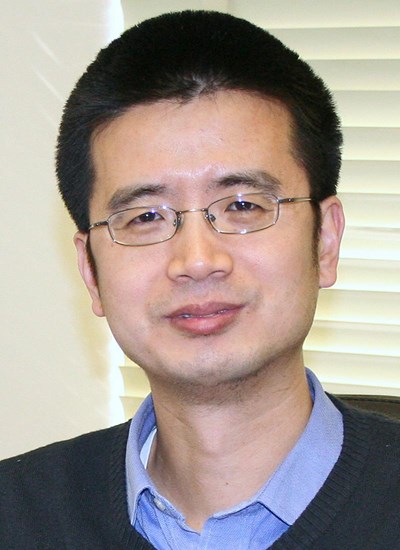
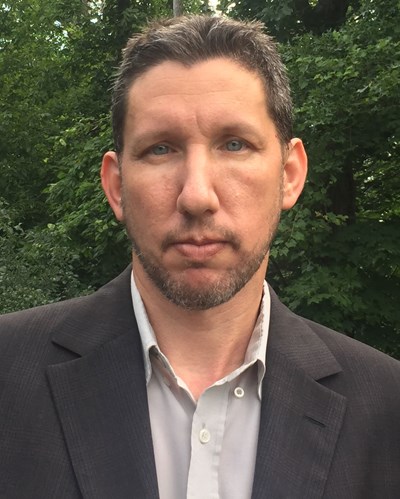
Guanling Chen
Guanling Chen

We now live in an increasingly “wireless” society, with people staying in touch and accessing information anywhere and everywhere through mobile smartphones.

“The smartphone market is growing rapidly, and this has led to a booming mobile applications industry,” says Computer Science Asst. Prof. Guanling Chen, who recently received a three-year $300,000 grant from the National Science Foundation (NSF) to help improve the consumers’ experience in using such applications.

Apple iPhones, Google Android phones, Windows Mobile phones, BlackBerry and many other smartphones allow users to install third-party applications on their mobile devices to provide access to news, weather, investing, games, entertainment and social networking.

“For example, in a little over a year, Apple iPhone has had more than 85,000 mobile applications and 125,000 developers,” says Chen. “More than 2 billion application downloads to iPhones have brought Apple $2.4 billion in revenue.”

More often than not, a user occasionally experiences technical difficulty in using mobile applications, such as slowness or connection failures.

“It is often unclear what is causing the problem — the device, the application, the network or the server,” says Chen. “This can lead to poor user-experience with mobile applications. The only feedback mechanism on the phones today is the number of bars indicating a signal’s strength, which can be misleading as strong wireless signals do not guarantee good end-to-end application performance.”

Chen will use the NSF funding to develop tools that will help users troubleshoot their wireless systems.

“These tools will constantly monitor networks, devices and applications on the smartphones,” he says. “Based on the information collected, an intelligent diagnostic algorithm can pinpoint the root cause of a performance problem and provide appropriate feedback to the mobile users.”

One interesting idea Chen would like to pursue is correlating diagnostic reports from multiple phones.

“For example, if multiple phones consistently report weak signals and connectivity problems near a certain location, it is more likely that wireless coverage is the issue rather than the individual devices themselves,” he explains. “How to make such collaborative diagnostic algorithm robust, accurate, power-efficient and privacy-respecting, and how to make it easier for users to understand troubleshooting results, are research challenges that my grad students and I will investigate.”

For more information about Chen’s work, visit his website.

 - Edwin L. Aguirre

Public Affairs - One University Avenue, Cumnock Hall Room 7, Lowell, MA 01854
Phone: 978-934-3224 Fax: 978-934-3033 Contact Us

This is an Official Page/Publication of the University of Massachusetts Lowell