University of Massachusetts Lowell
UML Home News Calendar Directory Maps & Directions Libraries Questions
eNews

Center Receives $1.1M Air Force Grant


Project Expands Ionospheric Radio Sounding Network

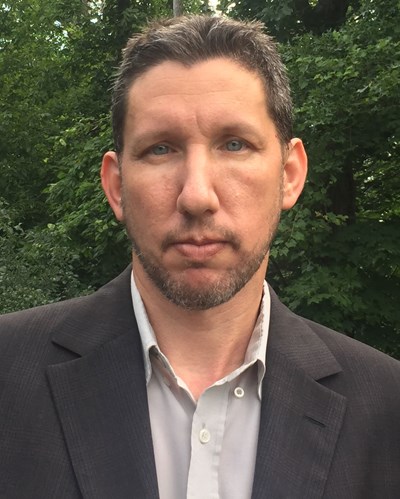
Bodo Reinisch
Prof. Bodo Reinisch with a Digisonde-4D ionospheric Doppler radar built at UMass Lowell’s Center for Atmospheric Research.

Researchers at UMass Lowell’s Center for Atmospheric Research have received a $1.1 million grant from the U.S. Air Force Weather Agency to expand the Center’s Digisonde Global Ionospheric Radio Observatory (GIRO). The ionosphere, the ionized upper region of Earth’s atmosphere, is widely used for long-distance short-wave radio communications.

In the last three years the Center has developed a new, advanced digital ionosonde – the Digisonde-4D – for monitoring the condition of Earth’s ionosphere in real time. The Center will build these ground-based ionospheric Doppler radars for the Weather Agency for five observation sites. Follow-up grants will increase the total to 30.

“The ionosphere is extremely variable and dynamic, with the density of free electrons changing from 1,000 per cubic centimeter to 10 million, with varying effects on satellite-to-ground communication and GPS navigation,” says Center Director Bodo Reinisch, the project’s principal investigator. For this reason, Reinisch proposed some 20 years ago that the U.S. establish a worldwide network of about 80 Digisondes to monitor the ionosphere in the wake of solar flares, geomagnetic storms and other global space-weather disturbances.

“My proposal found wide support,” he says, “but there was not enough funding, and the proposal was eventually declined as too futuristic.” However, the Center did build a smaller network of 17 Digisondes in the late 1980s for the U.S. Air Weather Service. This network is still operational and continues to supply valuable data to World Data Centers and UMass Lowell’s Digital Ionogram Data Base (DIDBase).

In the meantime, Reinisch and his colleagues collaborated with research institutes in other countries, and today there are some 80 Digisondes scattered around the world, operating continuously and feeding information to the Data Centers and the DIDBase.

The Air Force Weather Agency’s Nexion (Next Generation Ionosonde) project, which calls for 30 new Digisonde-4D systems to be deployed across the globe, will help make Reinisch’s futuristic dream become a reality. The first system is scheduled to be installed this February at Vandenberg Air Force Base in California. “The Nexion project was announced on a competitive basis, and the competition was tough,” he says. “Ultimately, the Center’s longtime scientific and engineering experience and international leadership in the field of geospace plasma sounding won us the award.”

The CAR is currently negotiating with colleagues in China. “They want to add four more Digisondes to GIRO, one of them to be placed in Antarctica,” says Reinisch. “GIRO currently has a big ‘hole’ in terms of coverage in the equatorial African region, and during my visit last November to the University of Ilorin in Nigeria, we discussed the possibility of installing a Digisonde on their campus. Equatorial observations are of special interest because Earth’s magnetic field, which controls the motion of the ionospheric plasma, is horizontal along the equator.”

                                                                        - Edwin_Aguirre

One University Avenue . Lowell, MA 01854 . 978-934-4000 - Contact Us
UMASS Lowell's Virtual Campus Directory for Mobility Access

UMassOnline | UMass Club | UMass System


This is an Official Page/Publication of the University of Massachusetts Lowell