Learn to think critically and apply the nursing process when caring for patients of all ages in a variety of settings.

Deliver Passionate, Patient-Centered Care

A nursing student prepares a syringe at the UMass Lowell Nursing Simulation Lab.

The Bachelor of Science (B.S.) in Nursing program at UMass Lowell provides students with the knowledge, skills and hands-on experience to deliver passionate, patient-centered care. Learn how to apply ethical principles and legal requirements in the delivery of care, develop therapeutic relationships with individuals and groups and promote health in diverse populations.

Build skills and confidence in the Donna Manning Simulation Laboratories. By interacting with high-fidelity adult, pediatric and maternal manikins or simulated patients (trained actors), you'll develop critical thinking and problem-solving skills before advancing to your clinical rotations.

From Interprofessional Education (IPE) activities, you'll learn how to work in teams with students from different disciplines such as dietetics, public health, exercise physiology, physical therapy and pharmacy.

Upon successful completion of the program, you will be eligible to sit for the Board of Registration in Nursing’s National Council Licensure Examination for Registered Nurse (NCLEX) examination for licensure as a registered nurse (RN).

High First-Time Pass Rate on National Council Licensure Examination (NCLEX) Exam

Our 2025 graduates had a 94.6 percent board licensure pass rate on their first try, exceeding the national average of 87.6 percent.

Nursing Career Options

UMass Lowell’s nursing graduates are in high demand, with 86 percent landing jobs or being accepted into graduate programs within six months of graduation.

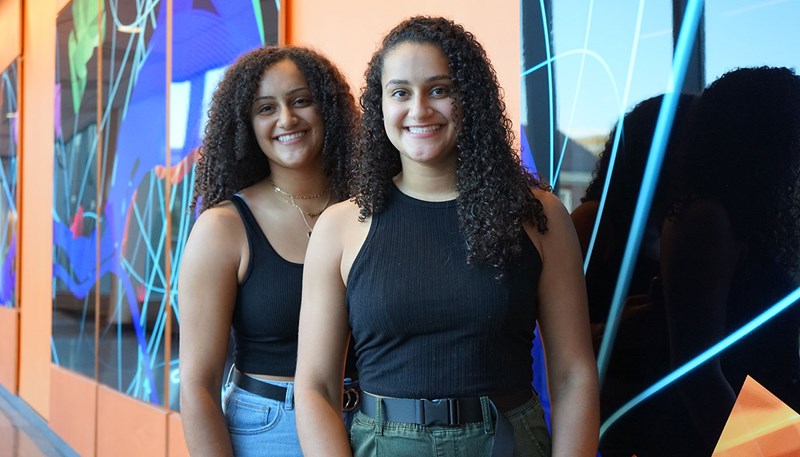
Two nursing students smile as they work at laptops in the UMass Lowell Nursing Simulation Lab.

The clinical aspects of the nursing program are developed, coordinated and supervised by the nursing faculty and are provided in collaboration with members of our community agencies. 

Student clinical placements and places of employment may include:

  • Beth Israel Deaconess Medical Center
  • Boston Children’s Hospital
  • Brigham and Women’s Hospital
  • Edith Nourse Rogers Memorial Veterans Hospital
  • Greater Lawrence Family Health Service
  • Holy Family Hospital
  • Lahey Hospital and Medical Center
  • Lawrence General Hospital
  • Lowell Community Health Center
  • Lowell General Hospital
  • Massachusetts Eye and Ear Infirmary
  • Massachusetts General Hospital
  • Tewksbury Hospital
  • UMass Memorial Medical Center
  • VNA of Greater Lowell Winchester Hospital

Year-by-Year Course Plan

Check out our degree pathways, which offer sample plans for completing your degree in four years.

For students who entered fall 2025 and beyond.

Freshman Year

Fall Semester

Course NumberCourse NameCredits
ENGL.1010 /
HONR.1100
College Writing I /
First Year Seminar in Honors: Text in the City (CW)
3
HSCI.1010Human Anatomy and Physiology I (SCL)3
HSCI.1011Medical Terminology for Health Professionals1
HSCI.1030Human Anatomy and Physiology Lab I (SCL)1
HSCI.1051Interprofessional Education First Year Seminar1
PSYC.1010Introduction to Psychological Science (SS)3
MATH.2830Introduction to Statistics (MATH)3
Total15

Spring Semester

Course NumberCourse NameCredits
ENGL.1020College Writing II (CW)3
HSCI.1020Human Anatomy and Physiology II (SCL)3
HSCI.1040Human Anatomy and Physiology Lab II (SCL)1
HSCI.1900Chemistry of Health and Environment3
HSCI.1900LChemistry of Health and Environment Lab1
PUBH.1021Introduction to Public Health (SS)3
Total14

Sophomore Year

Fall Semester

Course NumberCourse NameCredits
HSCI.2110Clinical Microbiology and Microbial Pathogenesis3
HSCI.2130Clinical Microbiology and Microbial Pathogenesis Lab1
HSCI.3190Pathophysiology3
NURS.2110Nursing Assessment and Skills2
NURS.2110LNursing Assessment and Skills Lab1
PSYC.2600Child and Adolescent Development3
PHIT.2030Health Information Technology3
Total16

Spring Semester

Course NumberCourse NameCredits
Total15
HSCI.3060Introduction to Gerontology (SS)3
NURS.2120Introduction to Nursing Practice (DCA)3
NURS.2120LIntroduction to Nursing Practice Lab1
NURS.2120RIntroduction to Nursing Practice Medical Calcs1
NURS.2180Pharmacology for Nursing Practice3
NUTR.2060Human Nutrition (STEM)3
HSCI.2051Career Readiness: Exploring Options1

Junior Year

Fall Semester

Course NumberCourse NameCredits
Total16
HSCI.3400IPE Research Methods (IL)3
NURS.3100Health Promotion and Risk Reduction of Families I5
NURS.3110Health Promotion and Risk Reduction of Families I Practicum (AIL)4
xxxx.xxxxArts and Humanities Perspective (AH)3
HSCI.3051Career Readiness: Building Experiences1

Spring Semester

Course NumberCourse NameCredits
NURS.3140Health Promotion and Risk Reduction of Families II5
NURS.3150Health Promotion and Risk Reduction of Families II Practicum (SRE)4
xxxx.xxxxArts and Humanities Perspective (AH)3
Total15

Senior Year


Summer Semester

Course NumberCourse NameCredits
NURS.4100Health Promotion and Risk Reduction of Families III5
NURS.4110Health Promotion and Risk Reduction of Families III Practicum (CTPS)4
NURS.4120Community Health and Health Policy (QL)3
xxxx.xxxxFree Elective3
Total15

Fall Semester

Course NumberCourse NameCredits
NURS.4130Role Transition (WOC)4
NURS.4140Role Transition Practicum6
NURS.4150Community Health Project3
HSCI.4051Career Readiness: Career Launch1
Total14

Total Minimum Credits = 120

Minimum [major] Credits: 36

Maximum [major] that can be counted toward graduation: 54

No more than two Breadth of Knowledge courses can be taken with the same prefix. The Core Curriculum courses may be taken in any sequence. Refer to the Core Curriculum policy for further details. You should meet with your faculty advisor to determine how you will meet the Core Curriculum requirements.

Current UMass Lowell students should use their Advisement Report in SIS. If you need assistance, please contact your advisor.

Restriction on off-campus study:

Be advised that any course taken at another institution must be formally approved prior to enrollment.

See the catalog policy for details.

Breadth of Knowledge (BOK) Glossary

  • SS - Social Sciences Perspective - 9 credits
  • AH - Arts and Humanities Perspective - 9 credits
  • SCL - Sciences with Lab Perspective - 6-8 credits
  • STEM - Science, Technology, Engineering and Math Perspective - 3 credits
  • CW - College Writing I and II - 6 credits
  • MATH - Math Perspective - 3 credits

Read more about the Breadth of Knowledge requirements.

Essential Learning Outcomes (ELO) Glossary

  • AIL - Applied and Integrative Learning
  • CTPS - Critical Thinking and Problem Solving
  • DCA - Diversity and Cultural Awareness
  • IL - Information Literacy
  • QL - Quantitative Literacy
  • SRE - Social Responsibility and Ethics
  • WOC - Written and Oral Communication

Read more about the Essential Learning Outcomes.

For students who entered fall 2025 and beyond.

Freshman Year

Fall Semester

Course NumberCourse NameCredits
ENGL.1010 /
HONR.1100
College Writing I /
First Year Seminar in Honors: Text in the City (CW)
3
HSCI.1010Human Anatomy and Physiology I (SCL)3
HSCI.1011Medical Terminology for Health Professionals1
HSCI.1030Human Anatomy and Physiology Lab I (SCL)1
HSCI.1051Interprofessional Education First Year Seminar1
PSYC.1010Introduction to Psychological Science (SS)3
PUBH.1021Introduction to Public Health (SS)3
Total15

Spring Semester

Course NumberCourse NameCredits
ENGL.1020College Writing II (CW)3
HSCI.1020Human Anatomy and Physiology II (SCL)3
HSCI.1040Human Anatomy and Physiology Lab II (SCL)1
HSCI.2110Clinical Microbiology and Microbial Pathogenesis3
HSCI.2130Clinical Microbiology and Microbial Pathogenesis Lab1
MATH.2830Introduction to Statistics (MATH)3
Total14

Sophomore Year

Fall Semester

Course NumberCourse NameCredits
HSCI.1900Chemistry of Health and Environment3
HSCI.1900LChemistry of Health and Environment Lab1
HSCI.3190Pathophysiology3
NURS.2110Nursing Assessment and Skills2
NURS.2110LNursing Assessment and Skills Lab1
PSYC.2600Child and Adolescent Development3
HSCI.3060Introduction to Gerontology (SS)3
Total16

Spring Semester

Course NumberCourse NameCredits
Total15
PHIT.2030Health Information Technology3
NURS.2120Introduction to Nursing Practice (DCA)3
NURS.2120LIntroduction to Nursing Practice Lab1
NURS.2120RIntroduction to Nursing Practice Medication Calcs1
NURS.2180Pharmacology for Nursing Practice3
HSCI.3400IPE Research Methods (IL)3
HSCI.2051Career Readiness: Exploring Options1

Junior Year

Fall Semester

Course NumberCourse NameCredits
Total16
NUTR.2060Human Nutrition (STEM)3
NURS.3100Health Promotion and Risk Reduction of Families I5
NURS.3110Health Promotion and Risk Reduction of Families I Practicum (AIL)4
xxxx.xxxxArts and Humanities Perspective (AH)3
HSCI.3051Career Readiness: Building Experiences1

Spring Semester

Course NumberCourse NameCredits
NURS.3140Health Promotion and Risk Reduction of Families II5
NURS.3150Health Promotion and Risk Reduction of Families II Practicum (SRE)4
xxxx.xxxxArts and Humanities Perspective (AH)3
Total15

Senior Year

Fall Semester

Course NumberCourse NameCredits
NURS.4100Health Promotion and Risk Reduction of Families III5
NURS.4110Health Promotion and Risk Reduction of Families III Practicum (CTPS)4
NURS.4120Community Health and Health Policy (QL)3
xxxx.xxxxFree Elective3
Total15

Spring Semester

Course NumberCourse NameCredits
NURS.4130Role Transition (WOC)4
NURS.4140Role Transition Practicum6
NURS.4150Community Health Project3
HSCI.4051Career Readiness: Career Launch1
Total14

Total Minimum Credits = 120

Minimum [major] Credits: 36

Maximum [major] that can be counted toward graduation: 54

No more than two Breadth of Knowledge courses can be taken with the same prefix. The Core Curriculum courses may be taken in any sequence. Refer to the Core Curriculum policy for further details. You should meet with your faculty advisor to determine how you will meet the Core Curriculum requirements.

Current UMass Lowell students should use their Advisement Report in SIS. If you need assistance, please contact your advisor.

Restriction on off-campus study:

Be advised that any course taken at another institution must be formally approved prior to enrollment.

See the catalog policy for details.

Breadth of Knowledge (BOK) Glossary

  • SS - Social Sciences Perspective - 9 credits
  • AH - Arts and Humanities Perspective - 9 credits
  • SCL - Sciences with Lab Perspective - 6-8 credits
  • STEM - Science, Technology, Engineering and Math Perspective - 3 credits
  • CW - College Writing I and II - 6 credits
  • MATH - Math Perspective - 3 credits

Read more about the Breadth of Knowledge requirements.

Essential Learning Outcomes (ELO) Glossary

  • AIL - Applied and Integrative Learning
  • CTPS - Critical Thinking and Problem Solving
  • DCA - Diversity and Cultural Awareness
  • IL - Information Literacy
  • QL - Quantitative Literacy
  • SRE - Social Responsibility and Ethics
  • WOC - Written and Oral Communication

Read more about the Essential Learning Outcomes.

Bachelor of Science in Nursing graduates will be able to:

  1. Apply established and evolving disciplinary nursing knowledge as well as knowledge from other disciplines including a foundation in liberal arts and natural and social sciences to the practice of nursing.
  2. Provide coordinated, holistic, respectful, compassionate, evidence-based person-centered care across the lifespan.
  3. Advocate for and deliver care that promotes the health of diverse populations through traditional and non-traditional partnerships with communities and public health agencies for the improvement of equitable population health outcomes.
  4. Apply theories and research in the delivery of evidence-based nursing practice to promote and improve health.
  5. Employ established and emerging principles of safety and improvement science to promote a culture of quality and safety through competent nursing practice.
  6. Work with interprofessional healthcare teams, patients, families, and communities to deliver health care that enhances the health care experience and improves outcomes.
  7. Coordinate resources withi complex systems of health care to provide cost effective, safe, quality and equitable care to diverse populations.
  8. Utilize informatics and healthcare technologies to gather data and form information to drive decision making that guides the delivery of safe, high-quality care.
  9. Cultivate a professional identity that incorporates accountability, ethical comportment, and a collaborative disposition that reflects nursing’s characteristics and values.
  10. Accept responsibility for lifelong learning, personal well-being, professional career development, and reflection for personal growth.


Why Study Nursing at UMass Lowell?

A student uses a stethoscope to examine a child mannequin in the UMass Lowell Nursing Simulation Lab.

Advanced Nursing Laboratories

Build your confidence and experience before going into a care setting through our state-of-the-art facilities, which include:

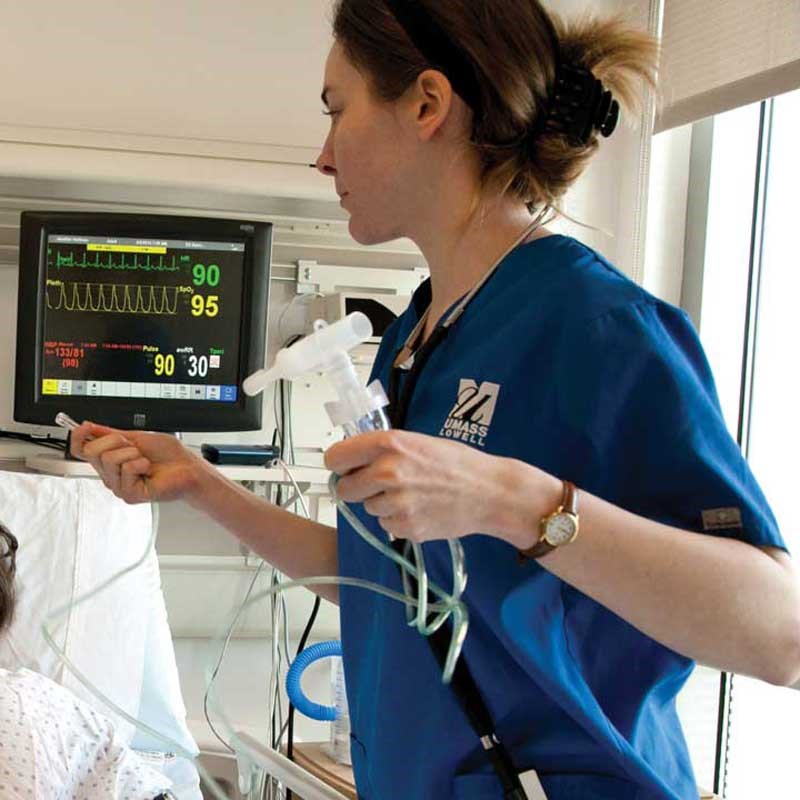
Nursing student wearing blue scrubs holds tubes near a patient bed in a UMass Lowell demonstration hospital wing

Hands-On Experience

Gain hands-on experience through our collaborative relationships with more than 250 clinical agencies, including:

  • Acute care hospitals (major teaching, community-based, medical centers)
  • Long-term care settings
  • Assisted living facilities
  • Primary care practices
  • School health settings
  • Visiting nurse and home care agencies
  • Occupational health setting
  • Child care and adult day health settings

During your senior year, you'll experience a semester of immersion in the nursing specialty area of your choice, working one-on-one with an expert nurse preceptor.

Nursing student sits at an outdoor table

Fun Outside the Classroom

Put your learning into practice. Check out some of the fun ways UML students come together.

Nursing student wearing blue scrubs sits at a table in a UMass Lowell classroom

Bachelor’s-to-Master's or Bachelor’s-to-DNP Program

Get on the fast track to an advanced degree with our combined B.S/M.S. or B.S./Doctor of Nursing Practice (DNP) program
  • Available to juniors and seniors with a grade point average of 3.500 or better
  • Offers a continuous, coordinated sequence of courses
  • Reduced credit-hour requirements can save you time and money

Meet Our Students

Miranda Melo in UML scrubs working at a computer
Miranda Melo '20
Nursing

Miranda Melo feels well prepared for her nursing career. Her past clinical rotations included working at Lowell General Hospital, Winchester Hospital, Holy Family Hospital and the Encompass Health Rehabilitation Hospital of New England.

My dream was always to attend UMass Lowell with its renowned nursing program.
headshot of Marbella Leal
Marbella Leal '20
Nursing

An Honors College student fellowship gave Marbella Leal a chance to work with at-risk students and do research with a professor.

I felt like I made a difference in their life, even if it was a small one.
Emerson-Tully-1400
Emerson Tully ’28
Nursing

Honors nursing major Emerson Tully discovered the power of grant writing as an intern for the Refuge Art School, a nonprofit in Lowell.

I know that (UMass Lowell) is the place for me. I’ve made it home, and I love it here.

Visit UMass Lowell

Launch virtual tour

Visit campus, meet our people and picture yourself here. Find in-person and virtual tours and events.

Still Exploring Majors?

We've got 120+ programs. Browse our Program Finder to find the one that's right for you.

View All Programs

Accredited Program and Approved by the Commonwealth of Massachusetts

The UMass Lowell nursing program is approved by the Massachusetts Board of Registration in Nursing and accredited by the Commission on Collegiate Nursing Education.