Environmental Health and Safety


Laboratories are hazardous work environments. There are physical, chemical, radiological, and biological hazards in different laboratories.  To prevent injuries and accidents, it is important that applicable controls (engineering, administrative, and personal protective equipment) are in place in your labs.


Controlling Hazards in the Lab

List of engineering controls that should be implemented in your labs:

  1. The best type of engineering control is substitution.  Can you use a non-hazardous chemical instead of the hazardous chemical?  If so, this will eliminate the hazard right at the source.  If the hazard cannot be eliminated, can you use a less hazardous chemical?
  2. A fume hood or local exhaust ventilation such as a snorkel must be used for working with chemicals that are an inhalation hazard.
  3. A glove box may also be used to isolate yourself from hazardous chemicals.


List of administrative controls that should be implemented in your labs:

  1. All laboratory workers, including the Principal Investigators, must attend the annual laboratory safety training
  2. All laboratory workers must receive laboratory-specific training in the lab.  This may be documented in section 8 of the Chemical Hygiene Plan Notebook (pdf). 
  3. All laboratory workers must read the standard operating procedures (doc) for the hazardous procedures they perform in the lab.  If an SOP has not been written yet, please make sure that the lab worker or Principal Investigator writes the SOP before work begins. 
  4. Hard copies of material safety data sheets are available in the Chemical Receiving Stockroom located in room OLGI-3 of Olney Hall.  Do you have hard copies of material safety data sheets in your lab?  It is recommended that hard copies also be placed in section 6 of your Chemical Hygiene Plan Notebook.
    Here is a list of links to websites where you can run a query to obtain material safety data sheets:
    1. SIRI MSDS Index
    2. Material Safety Data Sheets (MSDS) - Linde Gases
    3. EMD Chemicals
  5. Customize all other applicable sections of the Chemical Hygiene Plan Notebook.

top


List of minimum personal protective equipment (PPE) that must be worn in the lab:

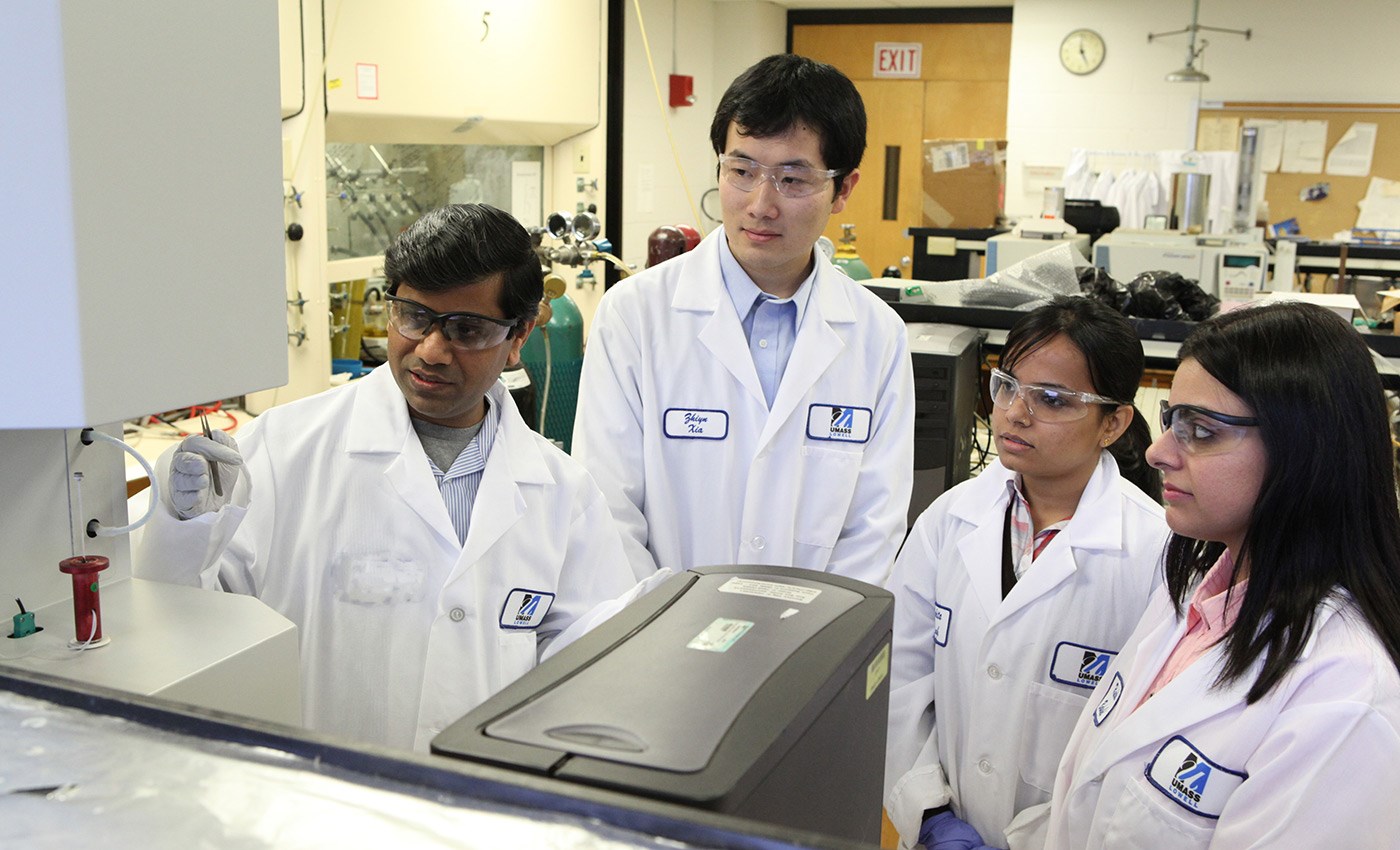
  1. Lab coat
  2. Safety glasses or safety goggles
  3. Proper gloves

Open toe shoes, skirts, shorts and capris are not allowed in the lab.  Pants and closed toe shoes must be worn.


Laboratory Inspections

All laboratories on campus will be inspected on an annual basis.  It is important that a representative from the lab be available during the lab inspection to answer any questions regarding work processes and controls in place. 

How do you prepare for a laboratory inspection?  Please make sure the controls listed above are in place.  Also, use the inspection checklist (doc) to conduct a pre-inspection before the Environmental Health and Safety lab inspection.  Remember, a messy lab is an accident waiting to happen!  Please make sure to clean your labs on a weekly basis.

Do you have any questions regarding laboratory safety?  If so, please e-mail: Kathi Lyon.


top

EHS - University Crossing 230, One University Avenue, Lowell, MA 01854
Phone: 978-934-2618 Fax: 978-934-4018 Contact Us

This is an Official Page/Publication of the University of Massachusetts Lowell