University of Massachusetts Lowell
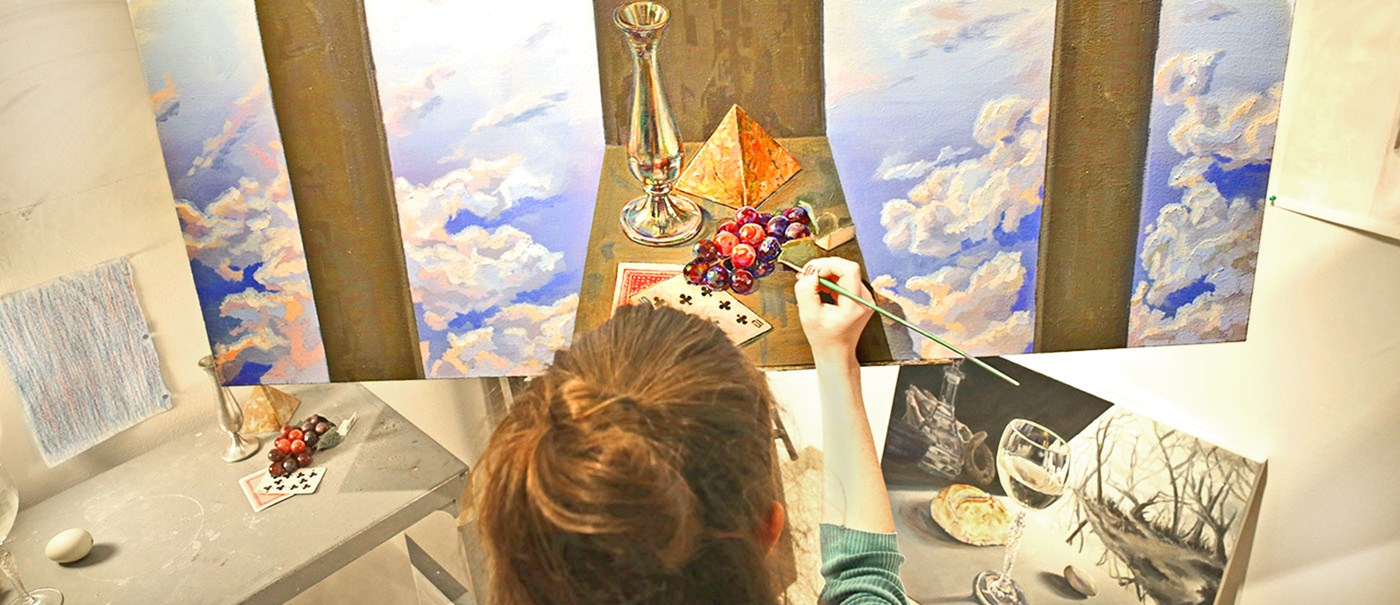
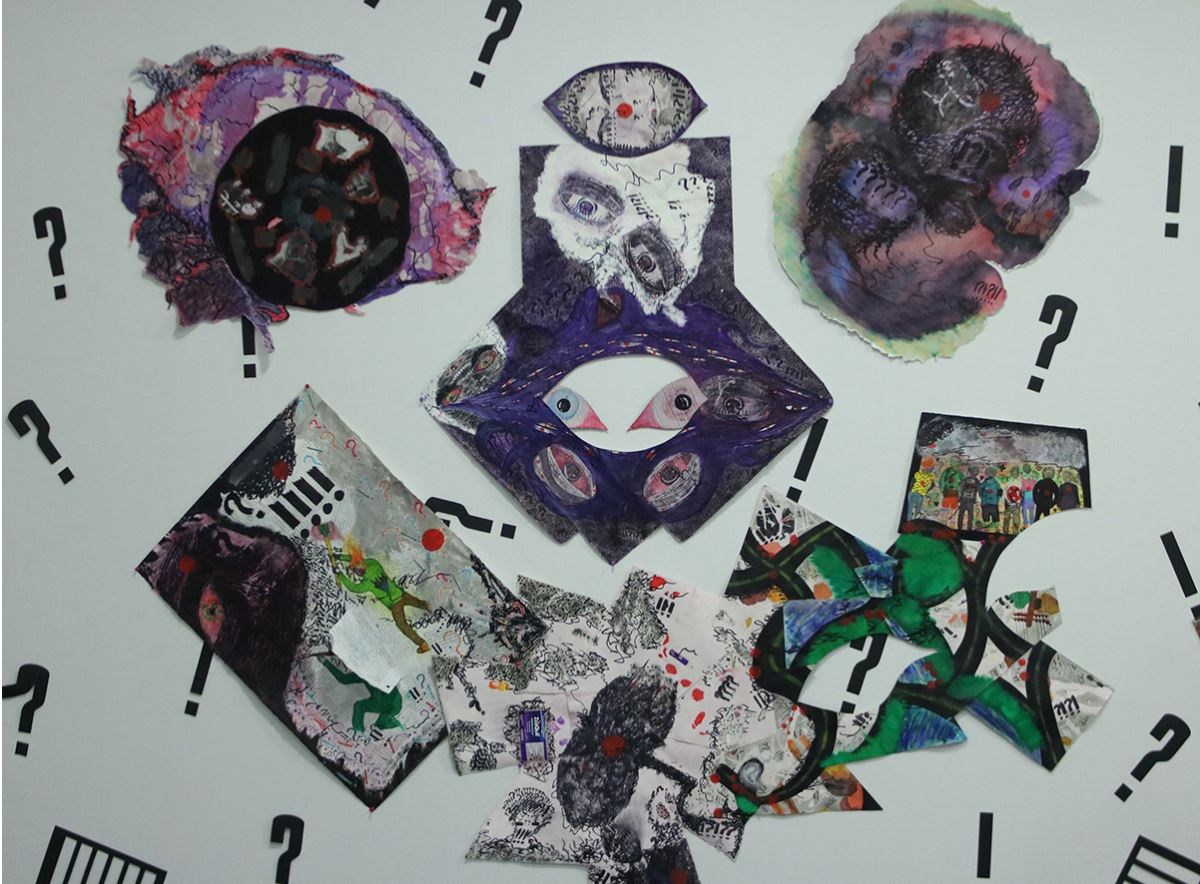
UML offers a Bachelor of Fine Arts (BFA) in art with a concentration in either Design or Fine Arts and an emphasis in: animation, painting, printmaking, sculpture, photography, graphic design, web design, and interactive-media.
The Art Major at UMass Lowell is designed to develop the artistic and aesthetic talents of students through a Bachelor of Fine Arts (BFA) program that meets the National Association of Schools of Art and Design accreditation requirements. The Art Department also offers a minor program in studio art and critical studies.
In either case, a discriminating appreciation of art and the technical knowledge for succeeding as educated artists is the goal. The UMass Lowell Art Major provides students the opportunity to prepare for careers in the applied art fields (animation, graphic design, interactive-media, and web design), the fine arts (including painting, photography, printmaking and sculpture), and/or museum research and gallery work and further study at the graduate level.
A strong foundation program is essential to the education of today’s artists and designers. At the University of Massachusetts Lowell, the foundations program reflects the interdisciplinary nature of contemporary art and design practices. Art is understood as a critical part of visual culture. Foundations students gain visual awareness and vocabulary through a six-course sequence. The acquisition of technical skills and techniques is always accompanied by concept development and critical analysis. Students get immersed in artistic life, just as one needs to be immersed in a foreign country in order to learn a foreign language. Risk taking is strongly emphasized while students begin developing their own voice and artist identity.
The following Studio Foundation Courses are required by all art majors. You need: 6 courses /18 credit hours
| Course Name | Course Number | Professor | Semester Offered | Pre-Requisites | |
|---|---|---|---|---|---|
| Art Concepts I | 70-101 | Hanna Melnyczuk, Michael Roundy, Christopher Pothier |
Both | ||
| Art Concepts II | 70-102 | Denise Dumas, Anna Mogilevsky | Both | Art Concepts I | |
| Digital Foundations | 70-113 | Ellen Wetmore, Sherman Wright | Both | ||
| Drawing I (Form & Space) | 70-255 | Nicole Enerson, Jan Johnson Stephen Mishol, Christopher Pothier, Michael Roundy |
Both | ||
| Drawing II | 70-355 | Hanna Melnyczuk, Anna Mogilevsky | Spring | Drawing I | |
| Form and Content | 70-201 | Jehanne-Marie Gavarini, Denise Dumas | Both | Art Concepts I |
UMASS Lowell is accredited by the National Association of Schools of Art and Design (NASAD), where undergraduates students will graduate with a BFA (bachelor of fine arts degree), as opposed to a bachelor's degree. This accreditation requires each of the following studio courses to meet for approximately 6 hours per week, where non-studio courses are commonly 3 hours per week. These studio courses, like traditional courses are 3 credits each.
Although students can focus in photography, graphic design, painting, animation, sculpture, and other artistic genres, art students at UMASS Lowell will receive either a BFA in Design or a BFA in Fine Arts depending on which they declare as their major. Click "List View" above to see a list of courses with more details. There are no required or recommended courses for your concentration, however students will need at least EIGHT courses from either the art or design concentration listed on each side to equate their declared major, and from the combined list a total of: 15 courses / 45 credit hours
Concentration: ART |
Concentration: DESIGN |
||
| Course Name | Course Number | Course Name | Course Number |
|---|---|---|---|
| Papermaking |
70-259 | Typography I | 70-230 |
| Printmaking | 70-261 | Typography II | 70-231 |
| Color |
70-269 | Digital Imaging and Photography | 70-262 |
| Water Media | 70-273 | Computer Art I |
70-265 |
| Ceramics |
70-281 | Computer Art II | 70-365 |
| Painting I | 70-271 | Graphic Design I | 70-291 |
| Painting II |
70-371 | Graphic Design II | 70-391 |
| Painting III | 70-471 | Graphic Design III | 70-490 |
| Photography I | 70-261 | 2D Animation (Discontinued, directed study available) | 70-372 |
| Photography II | 70-361 | 3D Animation I (Discontinued, directed study available) | 70-376 |
| Photography III | 70-461 | 3D Animation II (Discontinued, directed study available) | 70-377 |
| Alternative Photo Processes | 70-266 | Web Design I |
70-379 |
| Professional Studio Photography | 70-373 | Web Design II |
70-384 |
| Sculpture I |
70-275 | Web Design III |
70-389 |
| Sculpture II |
70-359 | Interactive Media I | 70-378 |
| Sculpture III |
70-475 | Interactive Media II | 70-381 |
| Books Art |
70-359 | Streaming Media for the Web | 70-385 |
| Monotypes | 70-369 | Illustration | 70-390 |
| Figure Drawing |
70-370 | Advertising Design | 70-395 |
| The Language of Video | 70-375 | Art and Copy | 70-397 |
| Sonic Arts |
70-345 | Advanced Studio | 70-491 |
| Advanced Studio | 70-492 | Directed Studies | 70-494 |
| Directed Studies | 70-494 | Advanced Tutorial | 70-495 |
| Advanced Tutorial | 70-495 | Internship (required in senior year) | 70-496 |
| Internship (required in senior year) | 70-496 | Artbotics | 70-100 |
| Course Name | Course Number | Professor | Semester Offered | Pre-Requisites | |
|---|---|---|---|---|---|
| Typography I | 70-230 | Karen Roehr, Patricia Orfao | Fall & Spring | All Foundation Courses | |
| Typography II | 70-231 | Karen Roehr, Patricia Orfao, Regina Gardner Milan |
Fall & Spring | All Foundation Courses, 70.230, 70.291, and/or permission of instructor. | |
| Papermaking | 70-259 | Karen Roehr, Patricia Orfao | Fall & Spring | All Foundation Courses | |
| Photography I | 70-261 | Chehalis Hegner | Fall & Spring | All Foundation Courses | |
| Digital Imaging and Photography | 70-262 | James Veatch | Fall & Spring | All Foundation Courses | |
| Computer Art I | 70-265 | TBD | Fall & Spring | All Foundation Courses | |
| Printmaking | 70-267 | Laurel McMechan, Kathleen Cammarata | Spring | All Foundation Courses | |
| Color | 70-269 | Sarah Lubin | Fall | All Foundation Courses | |
| Painting I | 70-271 | Sarah Lubin | Fall & Spring | All Foundation Courses | |
| Water Media | 70-273 | Michael Roundy | Spring | All Foundation Courses | |
| Sculpture I | 70-275 | James Coates Jr | Fall | All Foundation Courses | |
| Ceramics I | 70-281 | James Coates Jr | Fall | All Foundation Courses | |
| Graphic Design I | 70-291 | Karen Roehr | Fall & Spring | All Foundation Courses, and 70.230 | |
| Book Arts | 70-298 | James Coates Jr | Spring | All Foundation Courses | |
| Studio Workshop | 70-299 | Jehanne-Marie Gavarini, Arno Minkkinen, James Veatch, Chehalis Hegner | Fall & Spring | All Foundation Courses, 70.230 and permission of instructor | |
| Ceramics II | 70-325 | James Coates Jr | Fall & Spring | All Foundation Courses | |
| Sonic Arts | 70-345 | Ellen Wetmore | Spring | All Foundation Courses | |
| Sculpture II | 70-359 | James Coates Jr | Fall & Spring | All Foundation Courses and 70.275 | |
| Photography II | 70-361 | Arno Minkkinen, Chehalis Hegner | Fall & Spring | All Foundation Courses, and 70.261 | |
| Computer Art II | 70-365 | Patricia Orfao | Fall & Spring | All Foundation Courses and 70.265 | |
| Monotypes | 70-369 | Kathleen Cammarata | Fall | All Foundation Courses | |
| Figure Drawing | 70-370 | Nicole Enerson | Spring | All Foundation Courses | |
| Painting II | 70-371 | Jan Johnson, Stephen Mishol | Fall & Spring | All Foundation Courses, and 70.271 | |
| Professional Studio Photography | 70-373 | Arno Minkkinen | Spring | All Foundation Courses, 70.261, and 70.361 | |
| Language of Video | 70-375 | TBD | Spring | All Foundation Courses and permission of instructor | |
| Website Design | 70-379 | Tracey Greene, Brendan Sands | Fall & Spring | All Foundation Courses, 70.265 or 70.262 | |
| Advanced Web Design | 70-384 | Tracey Greene, Brendan Sands | Fall & Spring | All Foundation Courses, 70.265 or 70.262 and 70.379 | |
| Streaming Media for the Web | 70-385 | TBD | Fall | All Foundation Courses, 70.265 or 70.379 & 70.384 | |
| Web Art & Design III | 70-389 | Tracey Greene, Brendan Sands | Fall & Spring | All Foundation Courses | |
| Illustration Studio | 70-390 | Patricia Orfao | Both | All Foundation Courses | |
| Interactive Media | 70-378 | Sherman Wright | Fall | All Foundation Courses | |
| Graphic Design II | 70-391 | Regina Gardner Milan | Fall & Spring | All Foundation Courses, 70.230 & 70.291 | |
| Advertising Design Studio | 70-395 | Karen E Roehr | Spring | All Foundation Courses, 70.230, 70.231, 70.291, 70.391 or permission of instructor | |
| Art and Copy | 70-397 | Arno Minkkinen | Fall | All Foundation Courses, 70.230, 70.231, 70.291, 70.391 or permission of instructor | |
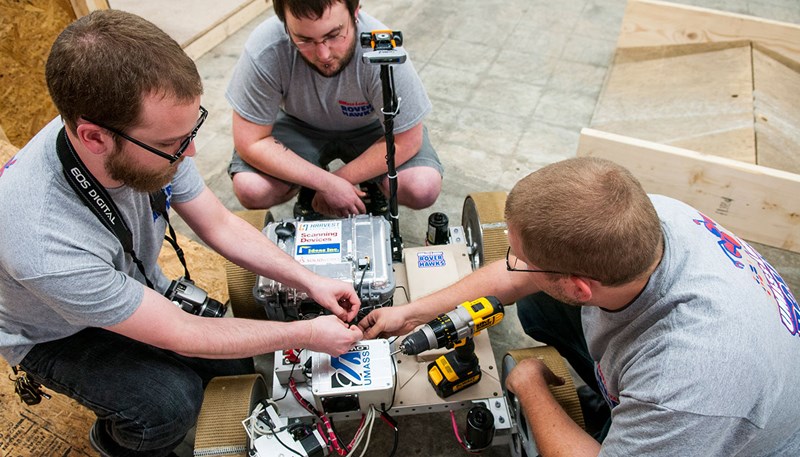
| Artbotics | 70-100 | Ellen Wetmore | Fall | All Foundation Courses | |
| Documentary Image | 70-398 | Chehalis Hegner | Fall | All Foundation Courses | |
| Ceramics III | 70-425 | James Coates Jr | Fall & Spring | All Foundation Courses, 70.281 | |
| Photography Workshop | 70-461 | Arno Minkkinen | Fall & Spring | All Foundation Courses | |
| Painting III | 70-471 | Stephen Mishol | Fall & Spring | All Foundation Courses & 70.271 | |
| Sculpture III | 70-475 | James Coates Jr | Fall & Spring | All Foundation Courses & 70.275 | |
| Graphic Design III | 70-490 | Karen E Roehr | Fall | All Foundation Courses, 70.230, 70.231, 70.291, 70.391 or permission of instructor |
| Course Name | Course Number | Professor | Semester Offered | Pre-Requisites | |
|---|---|---|---|---|---|
| Aesthetics and Critical Studies of Contemporary Art | 79-221 | Kirsten Swenson | Spring | 58.203 and 58.204 | |
| Aesthetics And Critical Studies of Photography | 70-225 | TBD | Varies | 58.203,58.204, 70.261, and 70.361 | |
| Aesthetics And Critical Studies of Understanding Movies: Cinema as Social Commentary | 79-380 | Jehanne-Marie Gavarini | Spring | 42.102 | |
| Aesthetics And Critical Studies of Contemporary Art and Culture | 79-352 | John Christ | Fall & Spring | 58.203, and 58.204 | |
| Aesthetics And Critical Studies of Graphic Design | 79-360 | Jonathan Craine | Fall & Spring | 58.203, and 58.204 | |
| Aesthetics And Critical Studies of New Media | 79-361 | Walter Wright | Fall & Spring | 58.203, and 58.204 | |
| Aesthetics And Critical Studies of Illustration | 79-362 | TBD | Varies | 58.203, and 58.204 | |
| Aesthetics and Critical Studies Seminar | 79-490 | Kirsten Swenson | Fall | 58.203, 58.204, and permission of the instructor & department | |
| Directed Study in Aesthetics and Critical Studies | 79-494 | Gregory Gonyea | Fall & Spring | 58.203, 58.204, and permission of the instructor & department |
Senior Studio Seminar is the capstone course for BFA studies. Senior Studio Seminar is a six-credit hour course and students will be expected to produce twice the quantity and quality of work that is normally asked for in a three-credit studio course. This seminar course will serve as a model for creative activity that professional contemporary artists and designers practice in their careers. The primary goal for the student is to development and establish a hunger and passion for independent, life long learning and art making. To achieve this students will involve themselves in a thesis semester that will include both the necessary research and the production of a substantial and mature body of work representing their creative and conceptual skills as artists and designers. At the conclusion of the semester the resulting work will be exhibited in the BFA senior exhibition and presented to a faculty review committee for evaluation. Enrollment is restricted to senior majors in the BFA program. A minimum course grade of C+ is required to pass Senior Studio Seminar. Students who receive a final semester grade below C+ must repeat the course. Incompletes are not allowed.
Fall & Spring. 6 cr. Prerequisites: Students who have completed 105 or more BFA applicable credits are eligible to apply for Senior Studio Seminar. A portfolio that demonstrates proficiency in the area selected for senior thesis study is required as well as permission of the Senior Studio Seminar Faculty Committee.
Denotes that course description includes viewable sample art.
Art Concepts I will focus on learning the visual language of the creative process through an examination of the principles of two-dimensional visual organization. These fundamental basics form the underlying structure of all studio and communication arts. Through slide lecture, guest lecturers, field trips, and studio projects, students will begin to understand the many forms that visual expression takes. The course will develop creative problem solving skills and students will learn to respond to personal challenge. Students will also be instructed in the principles of professional execution and be introduced to diverse modes of thought, media, and aesthetic expression. Art majors only.
Art Concepts II will focus on learning the visual language of the creative process through an examination of the principles of three-dimensional visual organization. These fundamental basics form the underlying structure of architecture, environmental graphic design, product design and sculpture. Through slide lecture, guest lecturers, field trips, and studio projects, students will begin to understand the many forms that three-dimensional expression takes. The course will develop creative problem solving skills and students will learn to respond to personal challenge. Students will also be instructed in the principles of professional execution and be introduced to diverse modes of thought, media, and aesthetic expression. Art majors only.
This course explores the computer as a tool of the visual language. Topics included are raster and vector-based image making, art for the internet & mobile devices, and current image capture and output methods. This course will introduce Photoshop, Illustrator, Flash and a basic programming with the aim of expanding the artist's toolkit. Lectures, readings, and discussions will provide an overview of history and contemporary ideas on the use of computers in art.
This required foundation course focuses on the translation of the three-dimensional world to the two-dimensional surface. Through a variety of media, surfaces, and approaches, students will concentrate on developing visual literacy and visualization skills. A wide range of assignments will be given to develop graphic and conceptual forms of expression.
Drawing II will ask the student to continue to develop their skills in observation and will emphasize giving form to contemporary ideas through building a strong sense of visual literary. Assignments include a wide range of color media, surface, and subject matter with the focus on the psychological and structural use of color, creative experimentation, and the development of personal style.
Form and Content is considered the capstone course of the Art Foundations Requirement. Form and Content will continue to focus on learning the visual language of the creative process by exploring the possibilities of time-based and sequential media. Through a variety of studio assignments and individual projects students will explore the integration of humanities concepts related to contemporary art and culture. Art majors only.
This course will provide an introduction to typography, its history and its application in the design industry. Students will explore letterforms, typographic contrasts, hierarchy of information, type families and their unique characteristics, and legibility. Through assigned readings, projects, observations, and lettering, students will gain an awareness of the power of typography in graphic design
This course will be a continuation in the study of typography with an emphasis on exploring the relationship between images, words and text. Students will further their understanding of hierarchy typographic voice, style, legibility and rhythm. Projects will involve both two-dimensional and three-dimensional media. At the end of this course, students will regard the power and beauty of type and “visual” voice with a deeper understanding and appreciation.
The papermaking course is designed to explore paper, not just as a surface to receive an image, but also as a material capable of being an artistic expression in and of itself. The course will explore the processes and techniques of making images in handmade paper, making images on handmade paper, making visual designs out of handmade paper and casting handmade paper into three-dimensional sculptural forms.
Photography I covers the basic camera and darkroom techniques as well as aesthetic principles. Emphasis will be on black and white film and paper emulsions. Students learn to develop and print their own photographs.
This course will cover the fundamentals of digital scanning, digital capture and image manipulation. Digital collage and other forms of digital imaging will be explored. Image preparation for other media will also be covered.
Computer Art I is an aesthetics and communications course using the computer as the primary tool for translating art ideas into digital form. The emphasis will be on practical usage of existing Macintosh software as a means of creation.
The course Printmaking will be an introduction to basic printmaking processes
A course in the systematic study of color and color theory to sharpen visual acuity, stimulate creativity and develop a greater facility in the use of color.
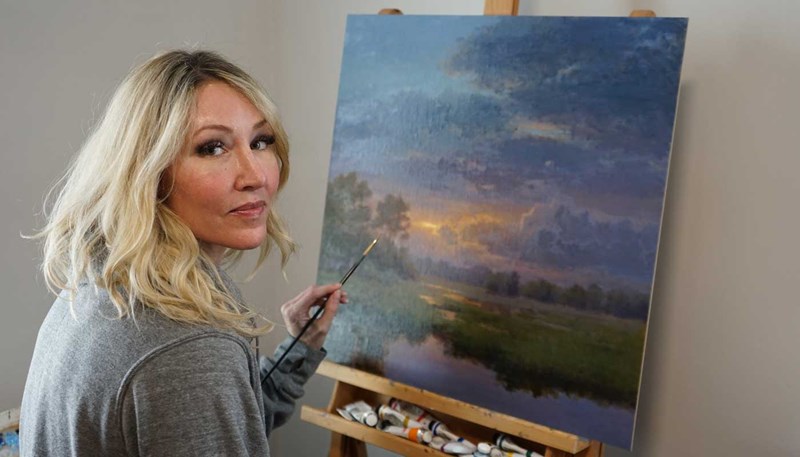
In this class students will develop the basic technical skills involved in making a painting. In addition students will explore the formal and conceptual issues that inform all painting. Building on previous experience in design and drawing, students will explore these aspects as well as color, materiality, abstraction, and meaning. Students will develop a growing understanding and greater fluency of the visual and material vocabulary of painting. Students will also develop an awareness of their own artistic and aesthetic leanings and develop their ability to critically evaluate and offer constructive criticism of a painting.
This course will cover the technical and creative uses of water based media as they apply to fine arts and graphic design. Assignments in acrylic, gouache, watercolor, and ink are designed to stimulate independent thinking.
Sculpture I will explore three-dimensional form through the use of plaster, wood, and metals. Assignments will include expressive problems based on human and non-objective form relationships. Contemporary attitudes in sculpture will be examined and students will be encouraged to search for their individual visual voice by maintaining an active journal throughout the semester.
Ceramics I will introduce the student to basic hand building techniques, wheel throwing and ceramic sculpture. The course will also examine clay as a material, glaze techniques and firing processes.
Graphic Design I is the first course in the sequence of the graphic design concentration. The course is an introduction to the basic design principles and skills as applied in the graphic design industry. The course presents the elements of type, image, color, contrast, and hierarchy and concept development in the context of the design process. The importance of professional attitudes and approaches to visual communication will be emphasized. Students will explore the use of signs, icons, logos and corporate identity systems, word and image integration as they learn the meaning of “good gestalt”.
Description not yet imported
Study of studio problems in visual structures and organization with various media and techniques; contemporary practices and issues will be explored. Topics will vary. This course may be repeated.
Building on Ceramics I as an introductory course, Ceramics II will ask the student to explore functional and nonfunctional ceramic form. Students will be expected to challenge themselves with scale, advanced glaze methods and they will become familiar with kiln firings. Historical and contemporary issues in ceramics will be covered through lectures, slide presentations and critiques.
Sonic Arts is an introductory course to hardware hacking for sculptural installation, audio composition and instrument invention. Assignments will include building piezo microphones, home-made speakers, exploring pickups used in performance and amplification of sculptural objects, manipulating tape head readers and building simple oscillation circuits for noise. Students will learn about electronics and soldering, including how to hack devices for audio and sculptural experiences and experiment with sound as an inspiration for sculpture and performance art.
Sculpture II will explore advanced sculptural materials including bee’s wax, concrete and aluminum casting. Contemporary attitudes in sculpture will be emphasized and students will be encouraged to continue to define their individual visual voice by maintaining an active journal throughout the semester. Contemporary cultural content will be emphasized.
Photography II is an advanced course in black and white photography that includes instruction in technique and vision. Emphasis will be on the development of a cohesive body of work in photography.
Computer Art II will continue to expose the student to advanced computer art methods that focus on design, layout, and digital imaging.
Monotypes will explore the one-of-a-kind “painter's print.” Emphasis will be on the development of personal expression through a variety of assignments and techniques. Three portfolios of prints are required, two with assigned topics, and one with a self-assigned theme.
Figure drawing is the study of the draped and undraped figure from life, stressing both sound observation and the creative use of human form as a vehicle for personal expression. A variety of assignments, graphic media, and approaches will be given in order to help explore both philosophical and aesthetic issues.
Building on the student’s previous experience in Painting I they will continue to explore the formal and conceptual issues that inform all painting. Students will experiment with a variety of conceptual, material and formal approaches to broaden their sense of the possibilities in painting. Students will develop an ongoing awareness of their own artistic and aesthetic concerns. Students will also continue to develop their ability to critically evaluate and offer constructive criticism of a painting.
This course will provide students with the fundamental understanding about the process and the concepts in animation for narrative and experimental expression. Preproduction including scripting and storyboarding will be especially emphasized. Hybrid techniques in both traditional and digital animations including hand-drawing, stop-motion, rotoscoping, pixilation as well as tweening will be introduced. Static and kinetic aesthetics of moving images will be explored through the review of historic and contemporary animations, and through the production. Students from this course will make a much smoother transition to 3D animation courses, Language of Video, Interactive media as well as Web Design/Art. The course will also introduce the student to historical and contemporary perspectives related to the discipline.
This is a professional level course in advertising product photography and studio portrait photography. Students will learn view camera techniques as well as principles of lighting using strobe equipment.
Description not yet imported
Students will learn the fundamentals of computer generated 3D modeling and animation. The emphasis will be on narrative, story telling, sequential content.
This advanced-level course is designed for students who have completed 3D Modeling and Animation and are interested in further exploring the narrative possibilities of animation. Conceptual drawings and story boarding will be required. The course will cover advanced sequencing, motion paths, editing, audio, and virtual environments. Other course topics will include media preparation for output to film, video, and CD/DVD.
This course will introduce the student to the processes of game conceptualization and game prototyping. Immersive and interactive media will be explored. Interactive, engaging game design will be emphasized. Conceptual drawings, storyboarding, 3D modeling and multimedia authoring will be employed. Proficiency in 3D model building and familiarity with Mac OS and/or Windows platforms required.
This is the introductory level course in the area and covers the basics of web design, HTML, CSS, some JavaScript, file management, formats, and uses for the web for both designers and artists. Students must have completed their Foundations course work, GD I and/or Computer Art I are very helpful but not requirements.
This advanced level course is designed for students who have completed Interactive Media I and are interested in continuing to develop their skills in interactive design media.
This will be an intermediate course focused on the best practices of the Web Design industry, and will give students a deeper footing in the professional practice of Web Design.
This is an advanced course for students interested in streaming video, video blogging, and streaming media phenomena like youtube, vimeo, twitter, and facebook, and the implications of telepresence performance on interpersonal communication and global identity.
This course will introduce the student to the processes of game conceptualization and game prototyping. Immersive and interactive media will be explored. Interactive, engaging game design will be emphasized. Conceptual drawings, storyboarding, 3D modeling and multimedia authoring will be employed. Proficiency in 3D model building and familiarity with Mac OS and/or Windows platforms required.
Web Art & Design III is an advanced course for students interested in Flash animation, ActionScript, php, and how databases function for blogging, making web-based art and digital performance.
This course provides students with a variety of experiences involving skills and techniques in both hand manipulated media and computer tools related to the execution of illustrations for children's books, fashion drawings, book jackets, folders, posters, and magazines.
Graphic Design II is an intermediate level class in graphic design dedicated to the continued development of powerful visual graphic communication, and presentation skills. Students will further their understanding of the interdependency between words and image.
This upper level course will involve developing strategic approaches to print advertising. Students will play the roles of art director, designer, and writer as they gain an understanding of the creative power of advertising campaigns. Part of the class will be devoted to critical discussion of the assigned work. The other half will be dedicated to presentation skills and team participation. The relationship of the agency, client, and audience will be emphasized.
The real world of advertising incorporates selling words and memorable images in a dynamic visual/verbal design unit. As copywriters and art directors, students learn to think pictures and see words as they prepare advertising campaign concepts for a variety of products and media, including print and television.
In a world of increasing manipulation, documentary photographs still astound us with their visual truths. In this course, students will utilize words and images "the primary tools of the photojournalist " to explore the significant issues of our time. Works by Fenton, O'Sullivan, Gardner, Riis, Hine, Bourke-White, Lange, Smith, Davidson, Salgado, Mark and others are studied for content, style, and inspiration. Fall, alternate years.
Ceramics III will require students to develop a personal visual voice in clay, resulting in a focused coherent body of work. Students will be expected to develop productive studio habits, continue to explore advanced glaze methods and participate in kiln firings.
Sculpture III is an advanced course allowing the student to further develop their understanding of contemporary sculptural form, leading to a more personal vocabulary. Advanced materials and methods including public art will be investigated. Contemporary cultural content will be emphasized. Students will continue to define their individual visual voice in sculpture.
Description not yet imported
Painting III is a course that will allow students to develop individual style and approach to content through a series of self-initiated paintings. Students will work closely with the instructor to develop a cohesive series that has a sound philosophical and aesthetic basis.
Sculpture III is an advanced course allowing the student to further develop their understanding of contemporary sculptural form, leading to a more personal vocabulary. Advanced materials and methods including public art will be investigated. Contemporary cultural content will be emphasized. Students will continue to define their individual visual voice in sculpture.
Description not yet imported
This is an advanced graphic design class with an emphasis on developing strong visual concepts. Students will work on complex projects. Projects will provide the opportunity for discussion concerning professional business practices, design ethics and pre-press. Finished work will be portfolio quality.
In order to enable students to expand expression in areas of their choice, they may repeat any studio course that is the most advanced offered in that given subject. They will be given more freedom within assignments and be expected to perform at a more advanced level.
A special problem in studio art is investigated through regular faculty meetings and independent studio work.
The Advanced Tutorial in Studio Art is a directed studies that affords advanced students an opportunity to pursue a previously explored problem in greater depth. The purpose is to sharpen and refine skill, content and presentation under the supervision of a full-time faculty member.
A study of late 20th Century movements in painting, sculpture, architecture, cinema, design, and multi-media and how they relate to 21st Century contemporary culture.
The course Aesthetics and Critical Studies of Photography is a survey and analysis of the history of photography that concentrates on the aesthetic development of the medium from a scientific discovery to an artist’s tool. European as well as American photographers will be studied ranging from Talbot, Nadar and Cameron to today’s contemporary masters.
This course will be a study and examination of content, theory, and criticism in contemporary art and culture.
This course will be a study and examination of the aesthetic theories and practices of graphic design. Significant practitioners of the art will be highlighted.
This course will be a study and examination of the aesthetic theories and practices of new media art. Significant practitioners of the art will be highlighted.
This course will be a study and examination of the aesthetic theories and practice of illustration. The work of master illustrators will be examined.
This course counts towards the Film Studies and Gender Studies minors. This is a 300 level course intended for Junior and Seniors.
This course will be an advanced study and examination of particular aesthetic concepts. Prerequisite: permission of instructor and department. Topics vary.
This course provides the opportunity for an individual supervised research project relating to questions of aesthetic interpretation and understandings. Prerequisite: permission of instructor and Department. Fall & Spring. Prerequisites: 58.203,58.204, and permission of instructor.
A program of on-campus and/or off-campus experiences for art majors only. Specific requirements will vary depending upon department policies and the nature of the program undertaken by the student. The intent of the practicum experience is to provide an occasion for investigation of a community, social, cultural or artistic area and for applying techniques of problem solving and/or credits. Students will be graded “satisfactory” or “unsatisfactory.”